

What Is a Moisturizer, What Does It Do and What Does It Cost in Bangladesh?

At a glance
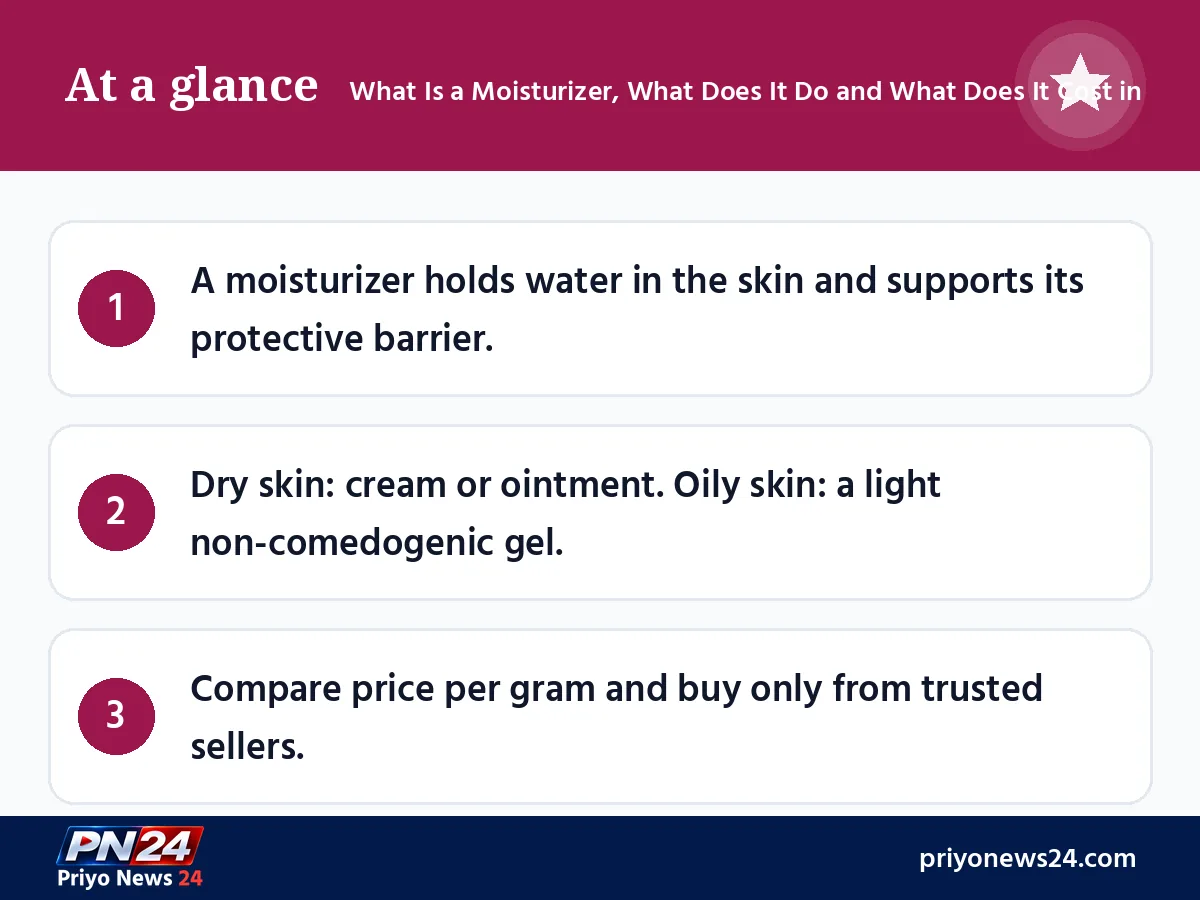
- A moisturizer holds water in the skin and supports its protective barrier.
- Dry skin: cream or ointment. Oily skin: a light non-comedogenic gel.
- Compare price per gram and buy only from trusted sellers.
As soon as winter arrives, many homes in Bangladesh start complaining about tight skin, rough hands and cracked heels. The first questions are always the same: what is a moisturizer, which one should I buy, and how much does a moisturizer cost? In shops, products that do the same job can differ hugely in price. Some people swear by expensive creams; others say plain petroleum jelly is enough. This guide, based on dermatologists' advice, explains in simple terms what a moisturizer actually does, which type of moisturizing cream suits which skin, why prices differ and what to check before you buy.
The information is current as of November 2026. No brand is being promoted here; the aim is to help you choose by ingredients.
What is a moisturizer and what does it do?
The very top layer of our skin works like a wall. It keeps water in and keeps dust, germs and chemicals out. Long hot showers, harsh soap, dry air and ageing all open gaps in this wall. Water then escapes quickly and the skin turns rough.
A moisturizer helps close those gaps. Most contain three kinds of ingredients:
- Humectants (water-attracting): glycerin, hyaluronic acid, urea. They draw water from the air and deeper skin layers and hold it in the top layer.
- Emollients (softening): ceramides, shea butter, some plant oils. They fill the spaces between skin cells and make the surface smooth.
- Occlusives (sealing): petrolatum (petroleum jelly), mineral oil, dimethicone. They form a thin film on the skin that stops water escaping.
So, in one line, a moisturizer keeps water in the skin, reduces roughness and itching, and keeps the skin barrier healthy. It does not change your skin colour or clear acne overnight; its job is protection and comfort.
Types of moisturizer: cream, lotion, gel or ointment?
Moisturizers come in several textures. The right one depends largely on your skin type and the weather.
| Type | Texture | Best for |
|---|---|---|
| Ointment | Thick and greasy; locks in the most moisture | Very dry hands and feet, cracked heels, chapped lips |
| Cream | Medium-thick; good hydration | Dry and normal skin, winter |
| Lotion | Thin; absorbs quickly | Normal skin, hot and humid weather |
| Gel | Very light, little oiliness | Oily and acne-prone skin |
The American Academy of Dermatology (AAD) advises that creams and ointments work better than lotions for dry skin and irritate less. In Bangladesh's hot, humid summer, however, many people cannot tolerate a thick cream on the face; a light lotion or gel is a good alternative then.
How to choose the best moisturizer for your skin type
Before looking at the brand name, get into the habit of reading the ingredient list and label on the back. A rough guide by skin type:
Dry skin
Choose a thick cream or ointment. Petrolatum, shea butter, ceramides, glycerin or hyaluronic acid are good signs. For very rough, flaky skin, creams with urea or lactic acid help, though they can sting on cracked or broken skin.
Oily and acne-prone skin
Look for a light gel or lotion labelled "oil-free" and "non-comedogenic" (does not clog pores). Light humectants such as glycerin or hyaluronic acid work well. Acne treatments dry the skin, so skipping moisturizer is a mistake.
Sensitive skin
If your skin easily turns red, itchy or stings, choose "fragrance-free" products with short ingredient lists. Note that "unscented" does not always mean fragrance-free; sometimes another chemical is added to mask the smell. Test any new product on a small patch behind the ear or on the inner arm for a few days.
Normal or combination skin
A medium lotion or light cream is usually enough. Use less on an oily forehead and nose and a little more on dry cheeks.
Extra protection by day
If you go out during the day, use a moisturizer with broad-spectrum SPF 30 or higher, or a separate sunscreen. Sun exposure worsens both dryness and dark spots.
How to apply moisturizer correctly
Even a good product underperforms if it is used the wrong way. Habits dermatologists recommend:
- Apply right after bathing: pat your skin with a towel and apply moisturizer within a few minutes while it is still slightly damp, so the water is trapped.
- Keep showers short: finish within 5-10 minutes and use lukewarm, not hot, water.
- Use a gentle cleanser: harsh soap washes away natural oils. A mild, fragrance-free cleanser is better.
- Moisturize your hands after washing: frequent hand-washing dries hands the most. Keep a small tube nearby.
- Go thicker at night: on very dry hands or feet, apply an ointment at night and wear cotton gloves or socks for faster results.
- Mind the air at home: if indoor air is very dry in winter, a humidifier can help.
Moisturizer prices in Bangladesh: why they vary so much
There is no single answer to how much a moisturizer costs. Prices for similar products differ for several reasons:
- Local or imported: locally made or locally packed products are usually cheaper. Imported products carry duty and dollar costs, so prices rise when the dollar does.
- Pack size: a small tube looks cheap, but per gram a larger tub is often better value.
- Special ingredients: products with ceramides, hyaluronic acid or added sunscreen usually cost more.
- Shop and offers: the same product can sell for different prices at different online shops.
Expensive does not mean better. The AAD also notes that the right ingredients matter more than the price tag; plain petroleum jelly often works very well on dry hands and feet.
A simple way to compare prices
Divide the price by the amount. For example, a 50 g tube at 400 taka costs 8 taka per gram, while a 200 g tub at 1000 taka costs 5 taka per gram, so the larger tub is actually cheaper. (These figures only illustrate the calculation; they are not real product prices.) On the day you buy, compare prices at 2-3 trusted pharmacies or online shops.
How to spot a fake moisturizer
Fakes of popular imported brands are sold in the market, and a fake cream can harm your skin. When buying:
- Be suspicious of a price far below the usual market rate.
- Check that the pack shows manufacturing and expiry dates, a batch number and the importer's name and address.
- Do not buy if the seal is broken, the print is blurry or there are spelling mistakes.
- Buy from pharmacies, authorised sellers or trusted online shops, and keep the receipt.
- If the colour, smell or texture looks unusual after opening, do not use it.
Making moisturizer at home: caution first
The internet is full of "homemade moisturizer" recipes. But home mixes contain no preservative, so germs can grow within days. Lemon juice, baking soda, toothpaste or fragrant oils can cause irritation and allergy. If you really want something homemade, make a very small amount for same-day use and test it on a small patch first. It is better to avoid this on sensitive or irritated skin.
When to see a doctor
See a dermatologist if there is no improvement after 2-3 weeks of regular moisturizing, if cracks bleed or ooze pus, if itching keeps you awake, or if red, swollen patches keep spreading. These may be signs of eczema, an allergy or another condition.
Final word
A good moisturizer is not the most expensive or most advertised product but the one that suits your skin type and that you will actually use every day. Read the ingredient list, compare the price per gram and build the habit of applying it right after bathing. If a skin problem lasts, do not start medicated creams on your own; consult a doctor.
FAQ
What is a moisturizer?
A moisturizer is a cream, lotion, gel or ointment that slows water loss from the skin and supports its outer protective layer. It usually combines water-attracting ingredients (such as glycerin or hyaluronic acid), softening ingredients and sealing ingredients (such as petrolatum).
What does a moisturizer do?
Its main job is to keep skin hydrated, reduce roughness, tightness and itching, and keep skin soft. Used regularly, it helps the skin barrier stay healthy so dust or harsh soap irritates it less.
Does oily skin need a moisturizer?
Yes. Oily skin can still lack water, especially when you use strong face washes or acne treatments. Choose a light, oil-free gel or lotion labelled non-comedogenic so it does not clog pores.
How much does a moisturizer cost in Bangladesh?
Prices vary widely by brand, size, whether the product is local or imported, and the shop; imported products also get dearer when the dollar rises. Compare prices at 2-3 trusted shops on the day you buy and work out the cost per gram or per millilitre.
When should I apply moisturizer?
Within a few minutes of bathing or washing your face, while the skin is still slightly damp. On the face, morning and night is usual; on the hands, after every wash.
Is homemade moisturizer safe?
Homemade mixes have no preservative, so germs can grow in them. Lemon, baking soda or fragrant oils can cause irritation and allergy. For sensitive skin, a plain fragrance-free moisturizer or petroleum jelly is safer than a home recipe.
Sources
- American Academy of Dermatology — How to pick the right moisturizer for your skin
- American Academy of Dermatology — Dermatologists' top tips for relieving dry skin
- WebMD — Moisturizers: do they work?
- CeraVe — How to choose a facial moisturizer for your skin type
- Arogga — Cream & moisturizer price in Bangladesh
Comments
No comments yet — be the first to comment.