

Patishapta Pitha Recipe: How to Make It at Home with Coconut-Jaggery and Kheer Filling

At a glance
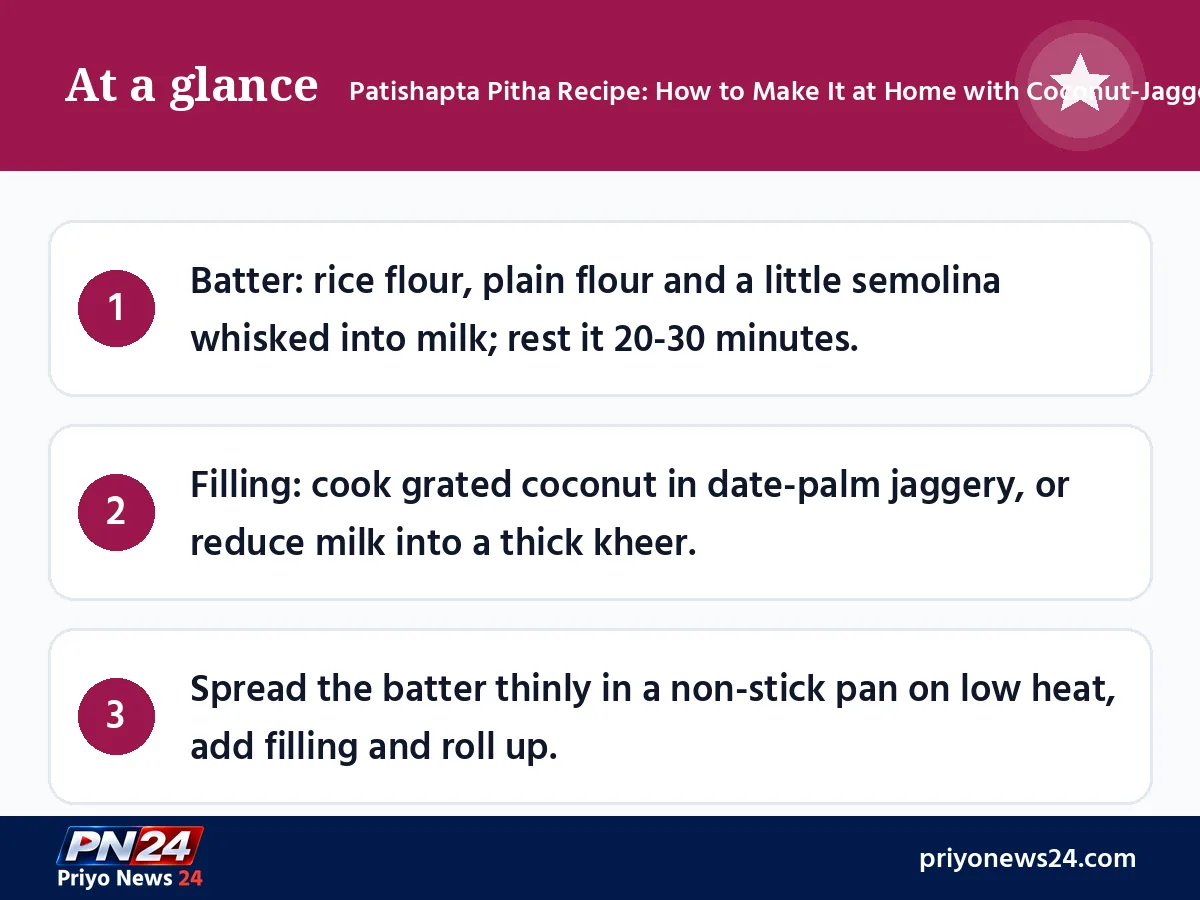
- Batter: rice flour, plain flour and a little semolina whisked into milk; rest it 20-30 minutes.
- Filling: cook grated coconut in date-palm jaggery, or reduce milk into a thick kheer.
- Spread the batter thinly in a non-stick pan on low heat, add filling and roll up.
When winter arrives, pitha-making begins in Bengali homes from villages to cities. Alongside bhapa and chitoi, one of the most loved sweet pithas is patishapta pitha: a thin, soft crepe wrapped around coconut cooked in date-palm jaggery or thick, milky kheer. Unlike bhapa it needs no special steaming pot, and unlike chitoi no clay mould; a single non-stick pan is enough to make patishapta at home. Drawing on well-known recipe sources such as Prothom Alo and Jago News, this guide gives ingredients with measures, two fillings, and the technique for thin patishapta that doesn't tear, step by step.
Patishapta pitha ingredients (about 12-15 pieces)
Proportions vary a little by family and region. The measures below are a balanced ratio that is easy to follow at home; after your first batch, adjust to taste.
For the batter
| Ingredient | Quantity |
|---|---|
| Rice flour (fine) | 1 cup |
| Plain flour (maida) | Half a cup |
| Semolina (suji) | 2 tablespoons |
| Milk | About 2 to 2.5 cups |
| Sugar or jaggery | 2-3 tablespoons (to taste) |
| Salt | A pinch |
| Oil or ghee | A little, to grease the pan |
For the coconut-jaggery filling
- Grated coconut: 2 cups
- Date-palm jaggery (liquid or chopped block): about 1 cup, to taste
- Cardamom powder: half a teaspoon (optional)
For the kheer filling
- Milk: 1 litre
- Sugar: 3-4 tablespoons
- Milk powder: 2-3 tablespoons (saves time thickening, optional)
- Cardamom: 2-3 pods
Making the fillings, step by step
Coconut-jaggery filling
- Melt the date-palm jaggery in a pan on low heat. If it is a block, chop it and melt with a splash of water.
- Once melted, add the grated coconut and keep stirring.
- Add cardamom and stir for 10-15 minutes until the mixture turns sticky and leaves the sides of the pan.
- Don't dry it out completely; a slightly moist filling keeps the pitha soft. Take it off the heat and let it cool.
Kheer filling
- Bring the milk and cardamom to a boil in a heavy-bottomed pan.
- Lower to medium heat and keep stirring from the bottom so it doesn't stick as it thickens.
- When the milk has reduced to less than half, add sugar; stir in milk powder if you want it thicker.
- Take it off when it starts to gather into a mass. It thickens further as it cools.
Many cooks mix a little kheer into the coconut-jaggery filling for an even richer taste.
Making the batter
- In a large bowl, mix the rice flour, plain flour, semolina, salt and sugar.
- Pour in the milk little by little, whisking so no lumps remain.
- The batter should be slightly thinner than pancake batter, like thin yoghurt, flowing easily off a spoon.
- Cover and rest for 20-30 minutes. The semolina and rice flour absorb milk, so the crepes tear less. If it thickens while resting, whisk in a little more milk.
How to cook patishapta without tearing
- Heat a non-stick pan on low to medium. Wipe it lightly with a little oil on paper or cloth; too much oil stops the batter from spreading.
- When the pan is warm, pour a large spoonful or small ladle of batter in the middle and swirl the pan, or use the back of the spoon, to spread it into a thin oval or round.
- Leave it uncovered for 30-40 seconds. It's ready when the top looks dry and the edges start to lift.
- Place one to one and a half tablespoons of filling in a line along one side.
- Roll it up gently with a spatula. You can fold in both sides first so the filling doesn't escape.
- Stir the batter before each crepe, because the rice flour settles to the bottom.
Patishapta is cooked on one side only; there is no need to flip it. A white or pale golden colour is traditional; browning it too much makes the wrapper hard.
Mistakes that spoil patishapta
| Problem | Likely cause | Fix |
|---|---|---|
| Crepe tears | Batter not rested or too thin | Rest 20-30 minutes; add a little plain flour if needed |
| Batter won't spread | Pan too hot or too much oil | Lower the heat; wipe off the oil |
| Wrapper is hard | Cooked too long or batter too thick | Cook for less time; add more milk to the batter |
| Filling is dry | Coconut cooked too long | Take it off while still slightly moist |
| Jaggery tastes bitter | Jaggery burnt on high heat | Melt jaggery on low heat |
Popular variations of patishapta
Once you master the basic recipe, small changes to the filling or batter give many flavours. Some variations common in Bengali homes:
- Kheersa patishapta: filled only with thick kheer, richer and milkier. It is often made for festivals and guests.
- Carrot patishapta: grated carrot is cooked in milk and sugar into a halwa-like filling. Carrots are plentiful in winter, so this is popular too.
- Semolina-filled patishapta: semolina, sugar and cardamom cooked in milk into a thick halwa make an easy alternative when coconut isn't at hand.
- Jaggery-batter patishapta: using date-palm jaggery instead of sugar in the batter gives a light brown wrapper with the aroma of jaggery.
Whatever the variation, don't use a runny or hot filling; a cool, thick filling is easier to roll and keeps the pitha from breaking.
Extra tips
- Fine rice flour: if shop-bought flour is coarse, sift it once. Coarse grains make the wrapper gritty.
- Test the first one: use the first crepe to adjust the batter thickness and heat. It is perfectly normal for the first one not to come out right.
- One at a time: cook one crepe at a time and try to keep the pan's heat steady.
- Cover the finished pitha: arrange the cooked pitha on a plate and cover with a clean cloth or lid so they stay soft instead of drying out.
Serving and storage
Patishapta can be eaten warm or slightly cool. Drizzling a little liquid date-palm jaggery or thickened milk on top makes it even better. Because of the milk and kheer, it is best not to leave it at room temperature for long; covered in the fridge it usually keeps for 1-2 days. Warm it lightly in a pan or oven before eating, and don't eat it if the smell or taste has changed.
If you make the filling ahead and keep it in the fridge in a separate container, the next day you only need to make the batter to cook fresh patishapta quickly, which is handy when guests come. For children, you can use a little less jaggery or sugar. People with diabetes or who need to limit sweets should eat small amounts; jaggery is as sweet as sugar, so using jaggery does not make the pitha healthy.
For other winter pithas, see our bhapa pitha and chitoi pitha recipes. Remember two things, a little patience and low heat, and you can make soft, thin patishapta pitha at home on your very first try.
FAQ
Why does my patishapta tear?
It usually tears when the batter is too thick or too thin, the pan is too hot, or the batter was not rested. Keep the batter like thin yoghurt, rest it 20-30 minutes and cook on low to medium heat. Plain flour or a little semolina helps the batter hold together.
Can I make patishapta without plain flour?
Yes, many people use rice flour only. The batter breaks more easily then, so add a little semolina and spread it very thin. Very fine rice flour gives the best result.
What can I use instead of date-palm jaggery?
Sugarcane jaggery or sugar also work for the coconut filling. Sugar gives a lighter colour and a slightly different taste. Keep the heat low with jaggery, or it can burn and turn bitter.
How long does patishapta keep?
Because of the milk and kheer, it is best not to leave patishapta at room temperature for long. Covered in the fridge it usually keeps for 1-2 days. Warm it lightly before eating, and don't eat it if the smell or taste has changed.
Comments
No comments yet — be the first to comment.