

Vitamin B12 Deficiency: Symptoms, Causes, Foods That Contain It and Treatment

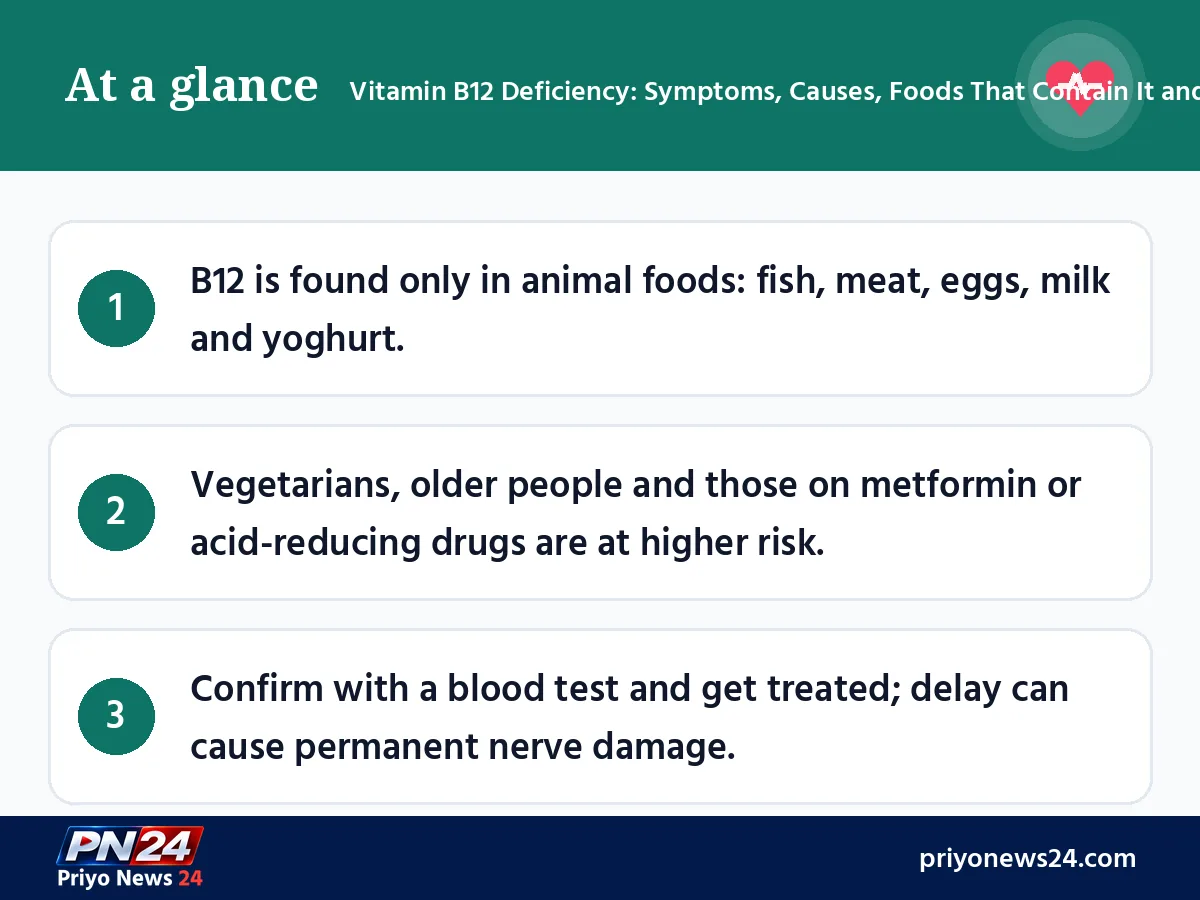
At a glance
- B12 is found only in animal foods: fish, meat, eggs, milk and yoghurt.
- Vegetarians, older people and those on metformin or acid-reducing drugs are at higher risk.
- Confirm with a blood test and get treated; delay can cause permanent nerve damage.
You sleep well enough, yet you feel tired all the time? Your hands and feet tingle, your tongue is red and sore, and you keep forgetting things? The cause could be vitamin B12 deficiency. This vitamin is essential for making red blood cells and keeping nerves healthy. The trouble is that the symptoms come on slowly and are easily mistaken for other illnesses. If it is caught late, some nerve damage can become permanent. This guide covers the symptoms, causes, who is at risk, which foods give you B12, and how it is tested and treated.
What vitamin B12 does
Vitamin B12 (cobalamin) has three big jobs in the body:
- Making red blood cells: without enough B12, red cells become large and immature and cannot carry oxygen properly. This is called megaloblastic anaemia.
- Protecting nerves: B12 is needed to maintain the protective coating around nerves.
- Making DNA: B12 works with folate to build new cells, especially for a growing baby in the womb.
The liver can store several years' worth of B12. So even when your diet runs short, it can take a long time for symptoms to appear.
Symptoms of vitamin B12 deficiency
Combining information from the UK's NHS and the US NHLBI, the common symptoms are:
- Extreme tiredness and lack of energy
- Pins and needles, numbness or tingling in the hands and feet
- A red, smooth and sore tongue; mouth ulcers
- Muscle weakness and problems with balance when walking
- Disturbed or blurred vision
- Low mood or depression, memory loss, confusion and trouble concentrating
- Pale or slightly yellow skin, breathlessness and a racing heartbeat
Many of these also occur with iron deficiency, thyroid problems or other conditions. So rather than deciding from the symptoms yourself, a blood test is the safe way to find out.
Why it happens: main causes and who is at risk
B12 deficiency happens in two ways: you get too little from food, or your body cannot absorb what is in your food. According to the NHS and the US NIH Office of Dietary Supplements, the main causes are:
| Cause | What it means |
|---|---|
| Pernicious anaemia | The immune system attacks the part of the stomach that helps absorb B12 |
| Low intake | Eating very little or no fish, meat, eggs or dairy |
| Age | Many older people make less stomach acid, so less B12 is released from food |
| Stomach or bowel disease or surgery | Removal of part of the stomach or intestine, Crohn's disease or coeliac disease |
| Some medicines | Long-term use of metformin (for diabetes) or proton pump inhibitors for acidity (omeprazole-type drugs) |
Two points matter in Bangladesh. First, many households eat far more rice than fish, eggs or milk; research on pregnant women in rural Bangladesh has also found B12 deficiency to be a significant problem. Second, the number of people with diabetes is growing and metformin is very widely used, while many people take acidity medicine for years. These groups should talk to their doctor about checking B12 from time to time. Never stop a medicine on your own, though.
Foods rich in vitamin B12
B12 occurs naturally almost only in animal foods. Easy local sources:
- Liver: one of the richest sources of B12 (during pregnancy, ask your doctor before eating a lot of liver, because it is very high in vitamin A).
- Fish: rohu, hilsa, sardine-type fish, small fish and dried fish.
- Meat: beef, mutton and chicken.
- Eggs: one egg a day is a useful supporting source.
- Milk, yoghurt and cheese: important for vegetarians.
- Fortified foods: some cereals and plant milks have B12 added; check the label.
Vegetables, pulses and fruit do not naturally contain reliable amounts of B12. So people who eat no animal foods at all (vegans) will find it hard to avoid deficiency without fortified foods or a supplement.
Daily needs: according to the NHS, adults aged 19-64 need about 1.5 micrograms a day. The NIH recommends 2.4 micrograms for adults, 2.6 in pregnancy and 2.8 while breastfeeding. Eating fish, eggs and milk regularly usually covers this.
Pregnancy, mothers and babies
B12 is vital while a baby's brain and nervous system develop in the womb. If the mother is low in B12, the baby stores less, and less B12 passes into breast milk. According to the NIH, breastfed babies of mothers who eat no animal foods at all are at higher risk of B12 deficiency. Such babies may stop growing well, refuse food, seem unusually floppy or fall behind in development.
So be open about your diet at antenatal check-ups. Try to have milk or yoghurt daily and fish and eggs several days a week. If your doctor thinks it necessary, they will test your blood and prescribe a supplement. If you are worried about your baby's growth or behaviour, tell the paediatrician about the mother's diet too.
A simple daily plan for vegetarians
If you avoid fish and meat but eat dairy and eggs, a glass of milk, a bowl of yoghurt and one egg a day cover a good share of your B12. If you don't eat eggs either, you can increase milk and yoghurt. For people who eat no animal foods at all, both the NHS and NIH point to fortified foods or supplements; discuss the dose with your doctor.
A common myth is that a B12 injection boosts energy. There is no evidence that extra B12 gives extra energy to people who are not deficient. If tiredness has another cause, finding that cause is what matters.
Testing and treatment: step by step
- Note your symptoms: when they started, which are worst and which medicines you take — this helps your doctor.
- See a doctor: usually a full blood count (CBC) and blood levels of B12 and folate are checked. A separate test for pernicious anaemia may be needed.
- Treatment depends on the cause: the NHS says tablets are usually given when the diet is the cause and injections when there is an absorption problem. With pernicious anaemia, injections at set intervals are often needed for life.
- Fix your diet: include fish, eggs or milk at least once a day.
- Follow up: blood tests are repeated after treatment starts to check progress.
Remember that taking only folic acid without correcting a B12 deficiency can partly hide the anaemia while nerve damage continues. So don't choose supplements yourself — ask your doctor.
When not to wait
See a doctor quickly if numbness in your hands or feet is getting worse, you lose your balance when walking, your memory declines fast, or you feel extremely tired during pregnancy. The NHS warns that if treatment starts late, some nerve damage may never fully recover.
The bottom line
Vitamin B12 deficiency is easy to prevent and, if caught in time, easy to treat. Eat fish, eggs, milk or yoghurt regularly; if you are vegetarian, older, or have taken metformin or acidity medicine for a long time, talk to your doctor about a B12 test. And don't dismiss long-lasting tiredness or tingling as "just age".
This article is for general awareness; the information follows guidance published by the NHS and NIH as of November 2026. For personal health problems, please consult a doctor.
FAQ
What are the main symptoms of vitamin B12 deficiency?
The NHS lists extreme tiredness, lack of energy, pins and needles, a sore and red tongue, mouth ulcers, muscle weakness, disturbed vision, low mood, memory problems and trouble concentrating. Symptoms develop slowly, so many people notice them late.
How much vitamin B12 do I need a day?
According to the UK's NHS, adults aged 19-64 need about 1.5 micrograms a day. The US NIH recommends 2.4 micrograms for adults, 2.6 during pregnancy and 2.8 while breastfeeding.
Where can vegetarians get vitamin B12?
Plant foods contain almost no natural B12. Milk, yoghurt, cheese and eggs provide it. People who eat none of these need B12-fortified foods or a supplement on a doctor's advice.
Does metformin lower vitamin B12?
Yes. NIH and NHS note that long-term metformin use can reduce B12 absorption in many people. Long-term use of some acid-reducing drugs (proton pump inhibitors) carries a similar risk. Don't stop the medicine — ask your doctor about a B12 test.
Will I need B12 injections or tablets?
It depends on the cause. If the problem is a lack of B12 in the diet, tablets are often enough. If the body cannot absorb B12, as in pernicious anaemia, injections are usually needed, sometimes for life. Your doctor will decide from your blood test.
Sources
- NHS — Vitamin B12 or folate deficiency anaemia
- NHS — Vitamin B12 or folate deficiency anaemia: symptoms
- NHS — Vitamin B12 or folate deficiency anaemia: causes
- NIH Office of Dietary Supplements — Vitamin B12 fact sheet
- NHLBI — Vitamin B12-deficiency anemia
- Cleveland Clinic — Vitamin B12 deficiency
- Nutrients — Vitamin B12 deficiency among pregnant women in rural Bangladesh
Comments
No comments yet — be the first to comment.