

Pregnancy Diet Chart Month by Month: What to Eat and What to Avoid

At a glance
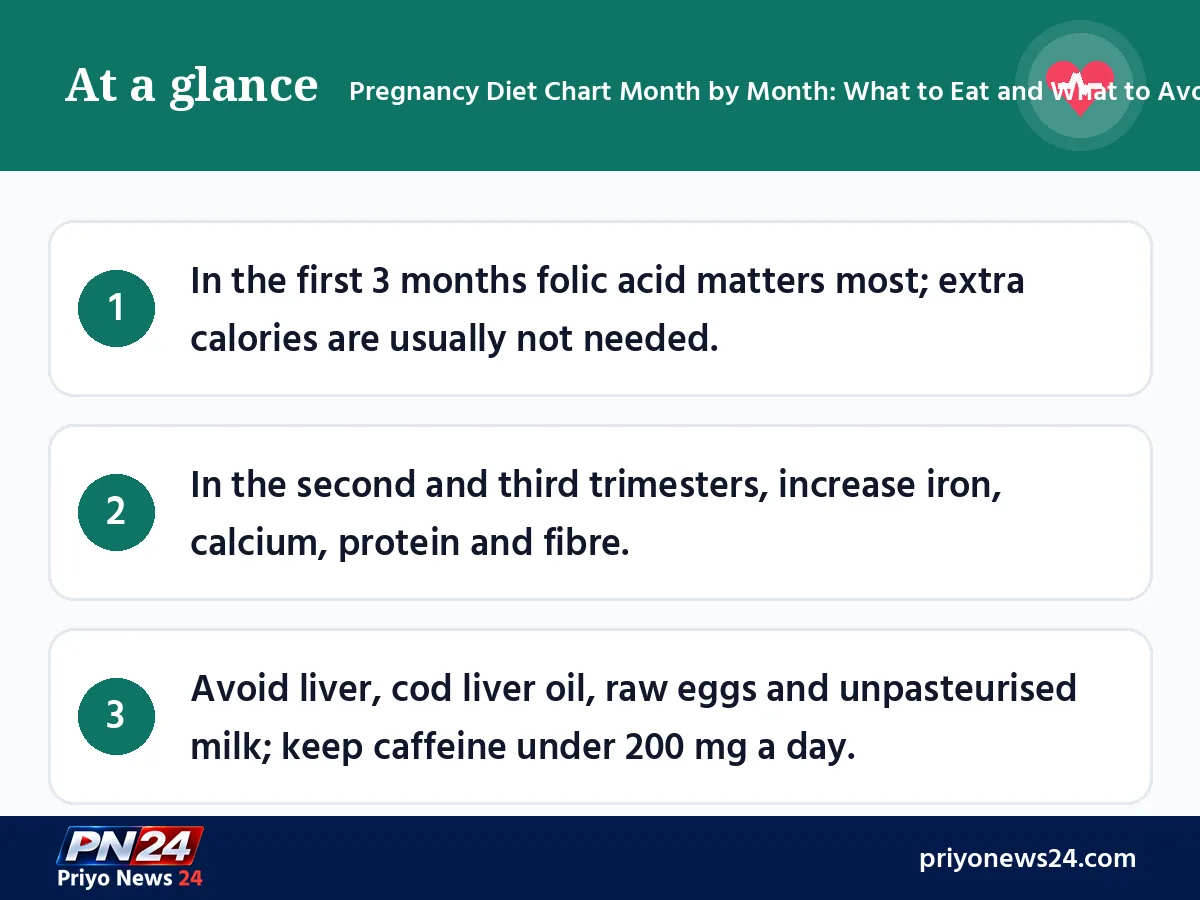
- In the first 3 months folic acid matters most; extra calories are usually not needed.
- In the second and third trimesters, increase iron, calcium, protein and fibre.
- Avoid liver, cod liver oil, raw eggs and unpasteurised milk; keep caffeine under 200 mg a day.
What a mother eats during pregnancy also supplies the building blocks for her growing baby. That is why questions about a pregnancy diet chart never stop: what to eat in which month, how much more to eat, and which foods to avoid completely. This guide sets out which nutrients matter most month by month and which foods found in an ordinary Bangladeshi kitchen provide them. The information was checked in November 2026 against guidance from the World Health Organization (WHO), the UK National Health Service (NHS) and the U.S. National Library of Medicine. It is general information; the right diet for you should be set by your doctor or a nutritionist.
Basic rules of a pregnancy diet
Before the month-by-month lists, keep these general rules in mind:
- Variety: every day include something from each group — rice or roti, lentils, fish, meat or eggs, milk or yoghurt, vegetables and fruit.
- Small and often: if you have nausea or heartburn, eat small amounts several times a day instead of three heavy meals.
- Water: drink plenty of safe water; it also helps with constipation.
- Extra calories: most women need no extra calories in the first trimester. About 340 extra a day are needed in the second and about 450 in the last trimester. So it is not "eating for two" but one extra light, nutritious meal.
- Supplements: WHO recommends 30-60 mg of iron and 400 micrograms of folic acid a day. Your doctor will decide which tablet and what dose.
First trimester (months 1 to 3)
The baby's brain and spinal cord begin to form. Many mothers have nausea, tiredness and mood swings.
Month 1 diet
- Folate-rich foods: spinach, red amaranth, red lentils, chickpeas, peas, oranges and malta.
- Milk and yoghurt: easy sources of calcium and protein.
- Whole grains: brown rice, wholewheat roti, oats.
- Iodised salt: always cook with iodised salt.
The NHS advises taking 400 micrograms of folic acid daily from before conception until 12 weeks; if you did not start earlier, start as soon as you know you are pregnant.
Month 2 diet
Nausea may peak this month. Starting the day with dry toast, puffed rice or plain biscuits helps many women.
- Iron: taro leaves, spinach, eggs, chicken, lentils.
- Protein: fish, eggs, chicken, lentils, milk.
- Zinc: fish, meat, lentils, nuts.
- Fibre: carrots, cabbage, bananas, guava.
Month 3 diet
- Vitamin B6: bananas, chicken, lentils, nuts and seeds.
- Omega-3: local fish (hilsa, rui, pangas), walnuts, flaxseed.
- Fresh fruit: guava, hog plum, oranges, bananas, pomegranate.
- Vitamin D: egg yolk, oily fish and gentle morning sunlight.
Second trimester (months 4 to 6)
Nausea usually eases and appetite grows. The baby's bones and muscles grow fast, so protein, calcium and iron needs rise.
Months 4 and 5 diet
- Protein: lentils, chickpeas, eggs, fish, chicken, paneer made from pasteurised milk, tofu.
- Whole grains: brown rice, wholewheat flour, oats — sources of magnesium, iron and B vitamins.
- Calcium: milk, yoghurt, small fish eaten with bones (mola, kachki), leafy greens. Pregnant adults need about 1,000 mg of calcium a day.
- Fibre and salad: cucumber, tomato, carrot salad, seasonal fruit.
Month 6 diet
Blood volume rises, and with it the risk of anaemia. Eating iron-rich foods with vitamin C (lemon, guava, Indian gooseberry) helps the body absorb iron.
Third trimester (months 7 to 9)
The baby gains weight and the brain develops quickly. Heartburn, constipation and tiredness may increase, so light but nourishing meals are important.
Month 7 diet
- Iron and protein: fish, meat, eggs, lentils.
- Calcium and magnesium: milk, yoghurt, nuts, bananas, leafy greens.
- DHA (omega-3): fish, walnuts, flaxseed — supports brain development.
- Vitamin C and fibre: guava, oranges, ripe papaya, vegetables.
Months 8 and 9 diet
- Fibre-rich foods: brown rice, lentils, vegetables, fruit — ease constipation.
- Calcium and iron: milk, yoghurt, small fish, greens, eggs.
- Vitamin A from food: carrots, pumpkin, sweet potato (not retinol supplements).
- Smaller meals: with heartburn, avoid heavy dinners and eat 2-3 hours before lying down.
At a glance: nutrients and local foods
| Nutrient | Why it matters | Easy sources |
|---|---|---|
| Folate / folic acid | Baby's brain and spine | Spinach, lentils, chickpeas, oranges |
| Iron | Prevents anaemia | Taro leaves, eggs, meat, lentils |
| Calcium | Bones and teeth | Milk, yoghurt, small fish with bones |
| Protein | Baby's growth | Fish, eggs, chicken, lentils |
| Omega-3 (DHA) | Brain development | Local fish, walnuts, flaxseed |
| Fibre | Prevents constipation | Vegetables, fruit, brown rice |
Foods to avoid or limit in pregnancy
Based on NHS guidance:
- Liver and liver products: too much vitamin A, which can harm the baby.
- Cod liver oil and vitamin A (retinol) supplements: avoid for the same reason. Many older articles call it healthy, but it is not safe in pregnancy.
- Unpasteurised (raw) milk and its products: risk of listeria. Boil milk well.
- Raw or runny eggs: cook until the yolk is firm.
- Some soft cheeses: don't eat brie, camembert or soft blue-veined cheese unless thoroughly cooked. Hard cheeses and paneer from pasteurised milk are generally safe.
- Raw or undercooked meat and fish: risk of toxoplasmosis and other infections.
- Shark, swordfish, marlin: mercury risk; limit oily fish to 2 portions a week.
- Caffeine: under 200 mg a day. A mug of instant coffee has about 100 mg, a mug of tea about 75 mg.
- Alcohol and smoking: avoid completely.
Extra care for vegetarian mothers
The NHS notes that women who don't eat fish or meat may find it harder to get enough iron and vitamin B12. Eat more lentils, chickpeas, soybeans, greens and nuts; if you eat milk and eggs, have them regularly; and ask your doctor or midwife whether you need a supplement.
A sample day of meals
| Time | Food |
|---|---|
| Morning | Wholewheat roti, vegetables, one boiled egg |
| Mid-morning | A guava or banana, a handful of nuts |
| Lunch | Rice, lentils, fish, greens, salad |
| Afternoon | A glass of boiled milk or yoghurt, puffed rice with chickpeas |
| Night | Rice or roti, chicken or fish, vegetables |
This is only an example. If you have diabetes, high blood pressure, thyroid disease or any other condition, your diet will be different.
Final word
More important than memorising a month-by-month list is eating varied, clean and well-cooked food every day, going to regular antenatal check-ups and taking the iron and folic acid your doctor prescribes. If you have severe vomiting, dizziness, swollen legs or cannot eat, don't wait — consult your doctor.
FAQ
What is most important to eat in the first month of pregnancy?
Folate or folic acid. Eat leafy greens, lentils, chickpeas and citrus fruit, and take a folic acid supplement as your doctor advises. WHO recommends 400 micrograms of folic acid a day, ideally starting before conception.
How much more should I eat during pregnancy?
According to the U.S. National Library of Medicine, most women need no extra calories in the first trimester, about 340 extra a day in the second and about 450 extra in the third. That is roughly one extra light, nutritious meal or snack, not eating for two.
Can I drink tea or coffee while pregnant?
Yes, in moderation. The NHS advises keeping caffeine under 200 mg a day. A mug of instant coffee has about 100 mg and a mug of tea about 75 mg.
Is liver safe in pregnancy?
No. Liver and liver products contain very high levels of vitamin A, which can harm the baby. For the same reason, avoid cod liver oil and supplements containing vitamin A (retinol).
Can I eat eggs during pregnancy?
Yes, eggs are a good source of protein. In Bangladesh, cook them until both the white and the yolk are firm, and avoid raw or runny eggs.
Does every pregnant woman need iron tablets?
WHO recommends daily supplements of 30-60 mg of iron with 400 micrograms of folic acid for pregnant women. Your doctor will decide the dose and timing based on your blood tests.
Comments
No comments yet — be the first to comment.